
Textile & Uniform Recycling Services UK
Textile and uniform recycling services for UK corporate waste reduction — securely dispose of branded clothing, uniforms, PPE and surplus textiles.
RECYCLING ARTICLES
Marketing Team
4/3/20267 min read
Understanding Textile and Uniform Recycling
Every year, an estimated 350,000 tonnes of clothing end up in UK landfill - and that figure doesn't account for the mountains of corporate uniforms, workwear, and branded garments quietly discarded by businesses. textile recycling is no longer a fringe concern; it's becoming a core pillar of credible corporate sustainability strategies.
For UK businesses, the challenge is twofold: managing the sheer volume of textile waste responsibly and ensuring retired uniforms don't become a brand security risk. The good news is that structured recycling solutions exist specifically to address both concerns.
Understanding how these services actually work - and what separates effective programmes from greenwashing - is where the real value starts.
How Textile Recycling Works: The Process Explained
Uniform recycling follows a more structured path than most people assume. It's not simply a matter of dropping old workwear into a general recycling bin. Textiles require specialist handling - particularly corporate garments that may carry logos, sensitive branding, or hazardous residues from industrial use.
At its core, the process transforms worn or unwanted fabric into usable material through several distinct stages. Garments are first assessed for condition, then separated by fibre type - natural fibres like cotton and wool follow a different processing route than synthetics. From there, materials are either prepared for reuse, mechanically shredded into fibre for industrial applications, or chemically broken down into raw inputs for new fabric production.
What makes corporate textile streams particularly complex is the data security dimension. Branded uniforms can't simply be resold or repurposed without first removing or destroying identifying marks - a step that general recyclers often overlook. Understanding this process in detail is the starting point; knowing how materials are actually collected and sorted is where the practical reality begins.
Collection and Sorting of Textiles
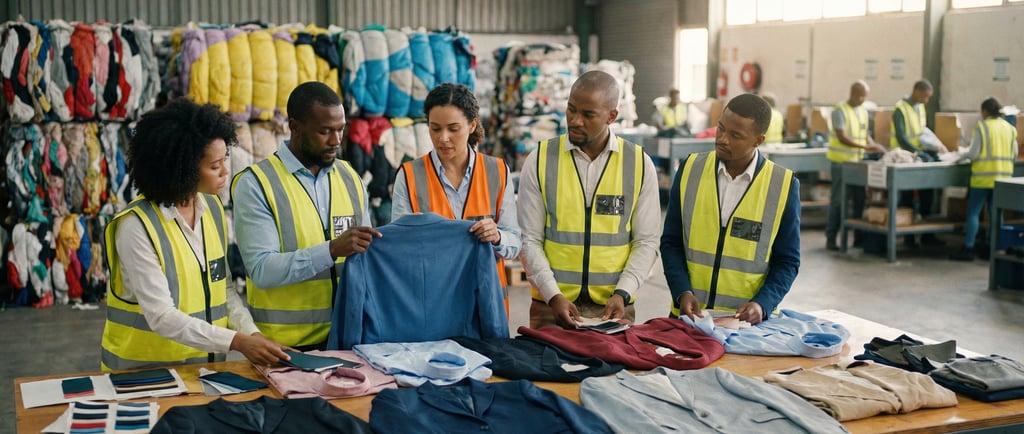
Before any recycling can happen, corporate waste reduction starts at the very first step: getting the right items collected and properly sorted. This stage is more consequential than it might appear. Uniforms often contain mixed fibres, embedded branding, metal fastenings, and in some cases, data-sensitive embroidery - all of which affect how they're handled downstream.
In practice, collection follows one of two models: scheduled bulk pickups or on-site bin systems. Once gathered, textiles are manually or mechanically sorted by material composition, condition, and contamination level. This sorting stage directly determines what can be recovered. You can explore how businesses structure this process through vetted, closed-loop systems designed to protect brand integrity.
What happens after sorting sets the stage for something more transformative - the physical breakdown of fibres into entirely new materials.
Shredding and Repurposing: Giving Textiles a New Life
Once sorted, the real transformation begins. The preferred route for corporate workwear is a remanufacturing process where textiles are securely shredded and broken down into fibres, which are then used to create new products - often the same type of item they came from. This closed-loop approach is what separates genuine secure textile destruction from simply diverting waste to landfill.
Mechanically recycled fibres commonly find a second life as insulation, industrial padding, or wipers. According to WRAP, extending the active life of clothing by just nine months reduces its carbon, water, and waste footprint by around 20–30%. The numbers make a compelling case on their own.
Shredded textiles ultimately become the raw material for tomorrow's products - a straightforward principle with genuinely significant environmental consequences. Understanding exactly what those consequences look like for your business is where the real case for corporate textile recycling starts to take shape.
The Benefits of Corporate Textile Recycling
Workwear recycling delivers measurable advantages that go well beyond simply keeping fabric out of landfill. For UK businesses managing large volumes of uniforms and branded clothing, the case is increasingly compelling - both financially and reputationally.
Key benefits include:
Landfill diversion - corporate waste reduction handled responsibly keeps potentially thousands of kilograms of synthetic and blended fabric from indefinite landfill storage
Cost efficiency - structured collection programs often reduce overall waste disposal costs
Brand protection - secure destruction eliminates the risk of branded items resurfacing publicly
Sustainability credentials - documented recycling supports ESG reporting and supply chain transparency
In practice, organisations that commit to structured recycling programs also find it easier to meet emerging regulatory expectations. That compliance dimension - and what it actually demands from businesses - is worth examining closely.
Sustainability and Compliance in Textile Recycling
For UK businesses, textile recycling isn't just an environmental choice - it's increasingly tied to regulatory expectations and corporate governance. The Waste and Resources Action Programme has consistently identified textiles as a priority waste stream, pushing organisations to demonstrate measurable action rather than vague sustainability pledges.
Compliance matters in another dimension too. Responsible textile recycling programs should align with broader ethical standards, including supply chain transparency. Businesses working with recycling partners that uphold a clear ethical trading commitment can satisfy due diligence requirements across procurement and ESG reporting frameworks.
Certificates of recycling and auditable data trails give sustainability teams the evidence needed for annual reports and stakeholder disclosures - turning an operational decision into documented corporate value. Seeing how this plays out in practice brings the numbers to life.
Case Study: Hypothetical Scenario of a Corporate Recycling Initiative
Example scenario: A mid-sized UK logistics company employs 400 staff, each issued annual workwear and PPE disposal-eligible protective equipment. When uniforms are retired, rather than sending mixed textiles to general waste, the company establishes a structured collection programme - consolidating garments, hi-vis vests, and hard-wearing PPE into designated bins across three depot sites.
The result? An estimated 2,000–3,000kg of textiles diverted from landfill annually, aligning with outcomes documented in real-world programmes. Staff engagement rises once employees understand where materials go, and the company gains documented diversion data useful for ESG reporting - the kind of verifiable outcome that structured secure disposal processes are specifically designed to support.
In practice, the most effective initiatives combine clear internal communication, reliable collection logistics, and a provider capable of handling mixed material streams. Of course, results vary depending on workforce size and garment complexity. Still, this scenario illustrates how tangible environmental progress is entirely achievable - once the practical barriers are removed. And many of those barriers, it turns out, are based on assumptions that don't hold up to scrutiny.
Common Misconceptions About Textile Recycling
Several persistent myths prevent UK businesses from acting on textile recycling - and it's worth clearing them up directly.
Myth 1: Mixed-fabric workwear can't be recycled. In practice, many professional services handle blended materials, sorting and processing them through appropriate channels rather than sending them to landfill.
Myth 2: Branded uniform destruction means loss of material value. Not so. Secure destruction processes can still divert fabric into recycled fibre streams, satisfying data and brand-security requirements and sustainability goals simultaneously.
Myth 3: Recycling programmes only suit large organisations. textile recycling services are increasingly accessible to businesses of all sizes, with flexible collection models available.
Understanding what's actually possible - including how evolving manufacturer responsibilities are reshaping the landscape - helps businesses make informed decisions. Still have questions? The next section addresses the most common ones directly.
Frequently Asked Questions About Textile Recycling
Can all types of workwear be recycled? Most corporate textiles - including polyester-blend uniforms, hi-vis gear, and cotton PPE - are accepted by specialist services. Mixed-fabric items are increasingly processable thanks to advances in fibre separation technology. However, items contaminated with hazardous materials may require specialist handling before standard recycling applies.
Do businesses need a minimum volume? In practice, many providers accommodate collections from as little as a single bag, though larger volumes typically attract better pricing. Textile recycling cost guidance suggests per-kilogram rates vary widely depending on volume and fabric type.
Is a certificate of destruction available? Yes - reputable services offer documented proof of responsible disposal, which supports corporate compliance reporting and, increasingly, requirements tied to emerging product traceability regulations.
Clearing up these practical questions is often what moves businesses from intention to action - and the key takeaways below bring everything together.
Key Takeaways
Corporate textile and uniform recycling is no longer a niche sustainability gesture - it's a practical, compliance-relevant strategy for UK businesses managing ongoing workwear waste. A few core points are worth keeping in mind as you move forward.
Recycling is more accessible than most businesses assume. Mixed fabrics, contaminated garments, and large-volume collections are all serviceable through the right provider. The barrier is rarely the textiles themselves - it's knowing where to start.
Documentation matters. Certificates of recycling protect businesses legally and support ESG reporting under frameworks like extended producer responsibility.
Volume creates leverage. Larger collections often unlock better service terms and more consistent collection scheduling.
Businesses committed to sustainable outcomes should treat textile disposal as a repeatable, managed process - not a one-off event. With that foundation in place, the practical next step is finding a capable provider near you.
Where to Recycle Large Quantities of Textiles as a UK Business
When you're managing bulk workwear disposal - think hundreds of uniforms, pallets of PPE, or regular scheduled collections - the logistics matter as much as the intent. Volume recycling requires a structured collection model, not a drop-off bin.
In practice, UK businesses have several routes available. Specialist commercial textile recyclers offer scheduled bulk collections, often with segregated bags or cages provided in advance. Some providers handle mixed corporate textiles - polyester blends, cotton, hi-vis - in a single stream, while others require sorting by material type.
Key factors to consider when sourcing a bulk textile recycling provider:
Minimum collection weights or frequencies
Whether certificates of recycling are issued for audit purposes
Coverage area relative to your site locations
Handling of branded or sensitive items prior to processing
For multi-site businesses, coordinating collections across regions adds complexity. A common pattern is to appoint a single national provider capable of managing consolidated volumes - simplifying reporting and ensuring consistent chain-of-custody documentation.
The right partner makes volume recycling straightforward rather than burdensome. The next section examines specific service providers operating in this space across the UK.
What Are Some Companies That Do Textile and Fabric Recycling?
When sourcing a corporate textile recycling partner, it helps to know what the broader provider landscape looks like. Several types of organisations operate in this space across the UK.
Specialist commercial recyclers focus exclusively on business textile streams - workwear, PPE, and branded garments - often offering secure destruction and certificates of compliance. Waste management companies with textile divisions handle collection logistics at scale. Not-for-profit textile networks redirect wearable items to charitable reuse before diverting non-wearable materials to fibre processing.
One useful independent resource is the Textile Recycling Association, which lists vetted operators across the UK. Beyond that, providers vary significantly in what they actually do with collected material once it leaves your site - which is exactly what the next section breaks down.
How Does the Process of Clothing Recycling Work?
Choosing a recycling partner is only part of the equation - understanding what actually happens to your workwear matters too. In practice, corporate textile recycling follows a clear sequence: collection, sorting, processing, and end-use allocation.
After collection, textiles are sorted by material type, condition, and contamination level. Wearable items may be redirected to reuse streams; degraded or branded uniforms are shredded, fibre-processed, or downcycled into industrial materials like insulation or padding. Garments with sensitive branding typically undergo secure destruction before fibre recovery begins.
The most important takeaway: diverting bulk workwear from landfill is straightforward when you work with a provider offering scheduled collections, documented processing, and verifiable waste outcomes. Businesses that treat textile disposal as a managed process - rather than an afterthought - consistently achieve better environmental and compliance results. Explore specialist corporate textile recycling services to find a solution scaled for your volume and sector.
Follow Us
Company Number: 15482817
Preserve Earth, 2025. All Rights Reserved.